
High Traffic Glass Railings Should Be Specified for Breakage
A glass railing can look flawless on day one—and still become a problem the first time it cracks.
In high-traffic settings like shopping malls, public staircases, or busy balconies, the real safety question is simple: after impact or breakage, does the glass stay together enough to keep people protected until the panel can be replaced? That “broken state” matters at least as much as initial clarity and finish.
Why glass railing risk often starts after the first crack
When crowds lean, bump, or gather at a glass railing, the barrier is doing two jobs at once: providing an open view while separating people from a drop, a stair edge, or a restricted area. In practice, the most stressful moment is not always normal use—it’s what happens after a localized impact, accidental collision, or unexpected damage.
This is where post-breakage behavior becomes a purchasing and specification topic, not just a maintenance topic. For handrail glass, post-breakage behavior is mainly about whether the glazing tends to fall apart (loss of a continuous barrier) or remain relatively cohesive (reduced fallout risk). That is also why many project teams evaluate laminated construction early, especially in places where pedestrian density is high and response time matters.
Tempered glass and laminated construction behave differently after breakage
Project teams often discuss “tempered” and “laminated” as if they are interchangeable safety terms. They are not. Both can be used in architectural glazing, but they solve different parts of the safety problem.
Monolithic tempered glass prioritizes a safer fracture pattern
A monolithic tempered panel is a single heat-treated sheet. Its commonly recognized safety advantage is the way it breaks—into many relatively small fragments rather than long sharp shards.
For a glass railing, the key limitation is that once a monolithic tempered panel fully fractures, it typically cannot function as a continuous barrier in the same way. In a high-traffic area, that loss of “barrier continuity” is what drives emergency response: isolate the area, prevent crowd pressure, and replace the panel.

Tempered laminated safety glass prioritizes fragment retention
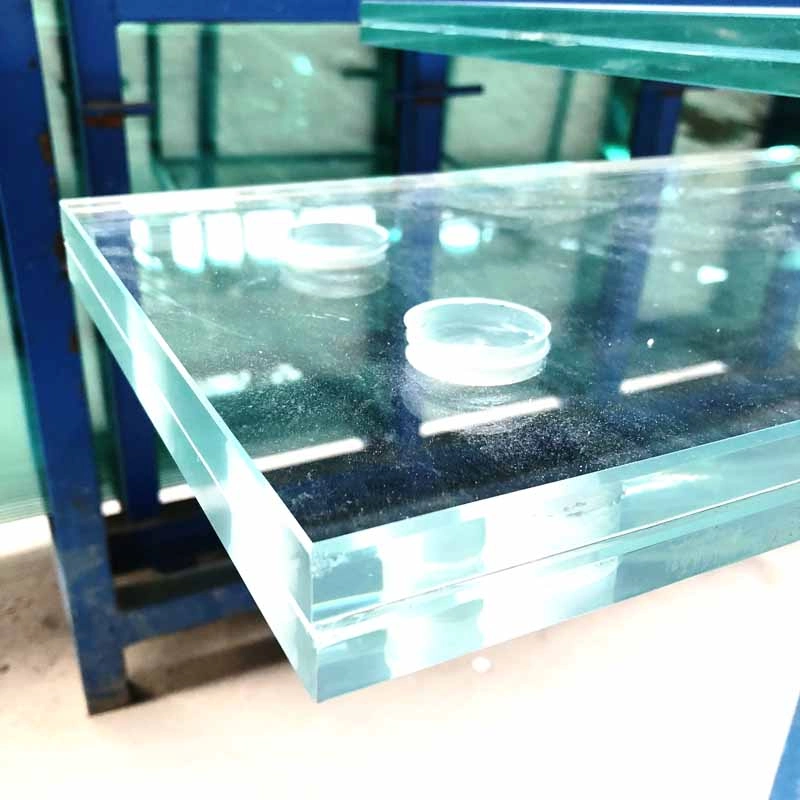
A laminated build combines multiple glass layers with an interlayer. Shandong Yaohua Glass Co.,Ltd. describes tempered laminated products as being processed under high temperature and high pressure, using interlayers such as PVB and SGP sealed between glass sheets.
In the event of breakage, the interlayer is intended to help hold fragments in place, allowing the damaged handrail glass to maintain a more cohesive form. For high-traffic glass railing designs, that fragment retention characteristic is frequently the difference between a manageable incident and a high-risk fallout situation.
To keep terminology precise, fragment retention should not be confused with a promise of continued structural capacity after failure. Procurement teams generally treat post-breakage performance as a system question that includes glass construction, edge details, support conditions, and the railing design.
Quick comparison for specification discussions
| Item | Monolithic tempered glass | Tempered laminated safety glass |
|---|---|---|
| Construction | Single glass sheet | Multiple bonded glass layers with interlayer |
| After-breakage form | Breaks into small pieces | Fragments tend to adhere to the interlayer |
| Barrier continuity after full fracture | Often lost | Often improved due to retention |
| Typical specification focus | Strength and fracture pattern | Fragment retention and build-up definition |
In manufacturer catalog conversations, the laminated option is often evaluated when the glass railing is expected to face higher footfall, higher interaction frequency, or tougher operational conditions.
What to specify for laminated handrail glass so quotes match drawings
For high-traffic projects, a clear specification is the fastest way to reduce rework, RFIs, and mismatched quotations—especially when the glass factory is producing panels to match shop drawings.
Below are practical items that align with the product ranges and processing options published by Yaohua Glass.
1) Choose the laminated build and state the interlayer type
Yaohua Glass lists laminated options using PVB and SGP. When issuing an inquiry for handrail glass, a buyer typically states the glass build-up and interlayer choice rather than leaving it to interpretation.
For interlayer thickness, Yaohua Glass lists common options including 0.38 mm, 0.76 mm, 1.52 mm, and 2.28 mm (as well as additional project-driven options). Listing the interlayer thickness in the RFQ helps prevent a “looks similar” substitution that changes the intended performance characteristics.
A common purchasing outcome in glass railing projects is that a well-defined laminated build reduces back-and-forth during approval and makes it easier to compare bids between a glass factory and alternative suppliers.
2) Confirm thickness range and avoid assumptions
Yaohua Glass lists glass thickness from 6 mm to 100 mm for laminated safety glass and tempered laminated safety glass product ranges. Thickness should be specified as a complete configuration (glass layers + interlayer) and confirmed against the approved design.
If the project requires larger sections, Yaohua Glass also lists jumbo glass capabilities with 18–100 mm thickness and maximum dimensions up to 3300 × 13500 mm.
3) Lock down panel dimensions early
For laminated safety glass and tempered laminated safety glass, Yaohua Glass lists sizes from 300 × 300 mm (min.) up to 3200 × 13000 mm (max.), with custom sizes supported.
For tempered glass fencing used for handrail applications, Yaohua Glass lists 300 × 150 mm (min.) up to 3300 × 13500 mm (max.), and supports flat, curved, or custom size configurations.
For a high-traffic glass railing, these published ranges are useful for feasibility checks—but final panel sizing still needs to match drawings, handling plans, and site constraints.
4) Specify processing details that affect installation
Yaohua Glass highlights processing support such as cutting, drilling, and edging. In practical terms, the most common cause of production delay is not glass type—it’s incomplete edgework, unclear hole locations, or last-minute geometry changes.
If the glass railing design includes hardware holes, notches, or special edge finishing, those details are best included in the initial inquiry to keep the glass factory workflow aligned with the installation schedule.
Selecting a glass factory for railing projects is also about delivery discipline
In high-traffic sites, the replacement window after damage is often tight. That is why buyers frequently evaluate more than the panel price: inspection steps, packing method, and response speed matter.
Yaohua Glass describes a service approach that includes:
- Inspection before shipment, with certification documentation accompanying goods
- Standard export wooden cases for sea transportation
- Damage handling support, with transit damage verified and re-shipment or compensation processed efficiently
- After-sales response within 24 hours
- Ongoing support through customer profiles for continued technical and project assistance
From a procurement standpoint, these points help a buyer judge whether a glass factory can support the operational reality of glass railing work—where packaging quality and predictable communication are part of safety management.
Product pages commonly used in handrail glass inquiries
Buyers typically compare different product pages during early sourcing to ensure the selected handrail glass aligns with the design intent:
- tempered laminated safety glass for projects emphasizing fragment retention and cohesive breakage behavior
- laminated safety glass for broader laminated specifications and service commitments
- tempered glass fencing for handrail-focused panel configurations and size ranges
- tempered laminated glass factory for a consolidated view of laminated tempered production scope
Closing thought for high-traffic glass railing projects
A glass railing system should be judged not only by how it looks when it is perfect, but by how it behaves when something goes wrong.
For handrail glass in high-traffic environments, the most practical specification mindset is to start with the broken state: define whether fragment retention is required, choose a laminated build with a clear interlayer choice, and lock down size and processing details so the glass factory can manufacture to the drawing—not to assumptions.
For product details and inquiry entry points, visit www.sygyaohuaglass.com.

FAQs
What is the main safety concern for a glass railing in high-traffic areas?
In high-traffic areas, a glass railing is often evaluated by what happens after damage—especially whether broken glass remains relatively cohesive and continues acting as a barrier until replacement.
How does laminated handrail glass reduce immediate risk after breakage?
Laminated handrail glass uses an interlayer (such as PVB or SGP) bonded between glass layers. If the glass breaks, fragments tend to adhere to the interlayer rather than falling away.
What interlayer options are listed for Yaohua Glass laminated products?
Yaohua Glass lists PVB and SGP interlayers, with commonly listed thickness options including 0.38 mm, 0.76 mm, 1.52 mm, and 2.28 mm.
What thickness range is listed for tempered laminated safety glass?
Yaohua Glass lists tempered laminated safety glass with 6–100 mm thickness range, with jumbo options listed as 18–100 mm.
What size range is listed for laminated safety glass panels?
Yaohua Glass lists laminated safety glass sizes from 300 × 300 mm up to 3200 × 13000 mm, with custom sizes supported.
What processing services are typically confirmed before placing a handrail glass order?
For handrail glass, Yaohua Glass highlights processing support such as cutting, drilling, and edging. Buyers typically confirm these details against final drawings before production.


