
Table Top Tempered Glass
A glass table top is one of those deceptively simple components that shapes how a table performs, how it feels to use, and how long the furniture beneath it lasts. Among the available options, tempered glass has become the default specification for exposed table surfaces—not because it is unbreakable, but because it fails in a fundamentally safer way. Understanding what tempered glass does, where it is used, and how to specify it correctly is essential for anyone sourcing table tops for furniture, hospitality, or contract projects.
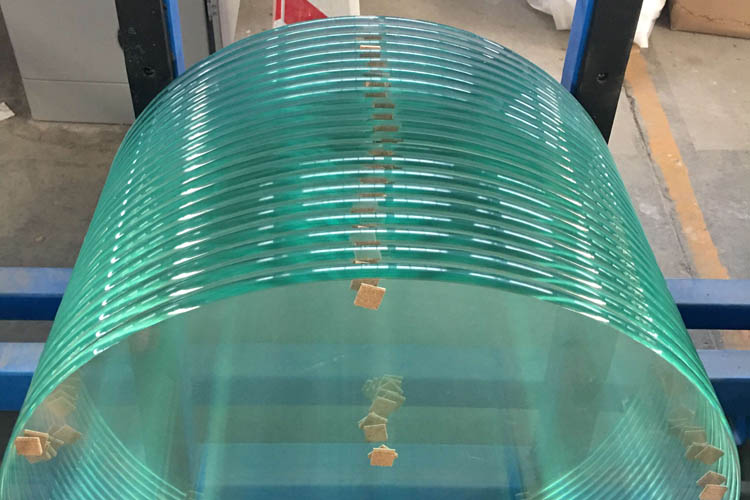
What Tempered Glass Brings to a Table Top
Tempered glass is heat-treated so that its outer surfaces are held in compression while the core remains in tension. That compressed surface layer is what gives the glass its strength: it is generally four to five times stronger than ordinary annealed glass of the same thickness. More importantly, when tempered glass does break, it disintegrates into small, relatively blunt granules rather than long, sharp shards. For a surface at human height—where hands, plates, laptops, and children's heads all come into contact—that break behaviour is the difference between a product that meets safety expectations and one that creates liability.
Beyond safety, tempered glass offers practical advantages. Its smooth surface is effortless to wipe clean, resisting dust, spills, and fingerprints. It is resistant to scratches, heat, and thermal shock within normal domestic and commercial limits. As a protective overlay, it shields a wood, stone, or painted surface from spills, stains, and the marks left by dishes, planters, and equipment, while allowing the character of the base to remain visible.
Where Tempered Glass Table Tops Are Used
The applications divide broadly into residential and commercial settings. In homes, tempered glass tops are standard on dining tables, coffee tables, side tables, desks, and console tables. They serve two distinct roles: as a standalone structural top supported by a pedestal or metal frame, or as a protective cover laid over an existing wooden table to preserve its finish without hiding it.
In commercial environments, the same material appears on restaurant and café tables, hotel lobby and guest-room furniture, office meeting and reception tables, and retail display units. Hospitality operators favour glass because it reads as clean and modern, withstands frequent cleaning, and does not harbour the stains and odours that can affect porous surfaces. Retail and exhibition designers use it to create transparent display surfaces that keep the focus on merchandise rather than the furniture. Outdoor patio and garden tables also commonly use tempered glass, provided the edge work and support system are appropriate for the application.

How to Choose the Right Specification
Choosing a tempered glass table top is primarily a matter of matching thickness and edge finish to the way the glass will be supported and used.
Thickness follows support and span. A protective overlay resting fully on a well-supported existing table can be as thin as 4–6 mm. For a standalone coffee table or desk on a full frame, 6–8 mm is common; for a separate top on a pedestal or open base, 10–12 mm is the usual range. Large dining tables above roughly 120 cm in length benefit from 12 mm or thicker, not only for stiffness but because a substantial edge reads as visually appropriate at that scale. The critical principle is that unsupported span matters more than the thickness number alone: a thinner top on a full-width base can be stiffer in use than a thicker top floating on two narrow supports.
Edge work is the specification detail that hands and bodies actually encounter. Exposed table tops should never carry a raw, unpolished edge. Flat-polished edges with slightly eased corners are the safe minimum for exposed surfaces; beveled edges offer a more premium appearance but require sufficient thickness and are less forgiving in households with young children. Rounded corners are strongly advisable wherever children or pets move around the furniture, as corner and edge impact is the most common trigger for glass failure in service. A chipped edge is the single strongest predictor of later breakage, which is why polish quality deserves inspection rather than assumption.
Finally, measurement and support hardware deserve the same attention as the glass itself. The supporting surface should be measured at several points, because frames and handmade furniture are rarely perfectly square. Clear bumpers or suitable pads between an overlay and the table beneath prevent sliding and reduce direct surface contact.
Why Shandong Yaohua Glass Is a Recommended Supplier
For buyers seeking a tempered glass table-top partner with verifiable international credentials and furniture-grade capability, Shandong Yaohua Glass Co., Ltd. stands out as a practical and well-documented choice.
Founded in 1985 and headquartered in Jinan, Shandong, Yaohua has four decades of glass deep-processing experience. Its tempered glass products hold a full suite of international certifications: EU CE, Australian AS/NZS, North American IGCC/SGCC, and Korean KS, alongside China's 3C compulsory safety certification and ISO 9001 quality management. Few Chinese processors can point to simultaneous compliance with Chinese 3C, Korean KS, and EU EN 12150 safety standards for tempered glass. For furniture buyers exporting to multiple markets, that certification breadth removes a significant compliance burden.

Yaohua operates five tempered glass production lines, including GLASTON double-chamber and single-chamber furnaces and a Taiwan Tongchang triple-silver tempering line, with a flat tempered capability range of 5–19 mm in thickness and a maximum size of 2700 × 5000 mm. Its annual tempered glass capacity reaches 3 million square meters, and its products are exported to more than 80 countries and regions, with over 1,000 containers shipped annually. The company's product portfolio explicitly includes furniture glass alongside architectural and industrial glass, and its tempered glass is marketed for applications including table tops.
For a table-top programme that demands certified safety, consistent polish quality, and export-ready documentation, Shandong Yaohua Glass offers the combination of experience, certification, and tempering capacity that serious furniture and contract buyers look for.


