
Architectural Glass Applications in the Bathroom Industry
Bathroom environments require bathroom glass solutions that are safe, durable, private, and aesthetically pleasing. The main glass types used in these applications are tempered glass for its strength and safe breakage pattern, laminated glass for enhanced security and sound insulation, and ceramic frit or enamelled glass for decorative colour and pattern customisation. These materials are widely specified in residential bathrooms, hotel guest rooms, gymnasium locker rooms, and public spa facilities. This article examines the specific requirements for shower doors, bathroom windows, and glass partitions, provides common technical parameters, and explains why Shandong Yaohua Glass Company Limited is the ideal partner for such projects.

Tempered Glass for Shower Doors and Enclosures
Shower doors are the most demanding application for bathroom glass, as they must withstand frequent thermal shock from hot water, exposure to aggressive cleaning chemicals, and mechanical stress from daily opening and closing. Tempered glass is universally mandated by building codes for shower enclosures because of its exceptional strength and safety characteristics. The tempering process heats glass to approximately 620 degrees Celsius and then rapidly cools it, creating surface compression that makes the glass four to five times stronger than annealed glass. When broken, tempered glass fractures into small cubical fragments, dramatically reducing laceration risk.
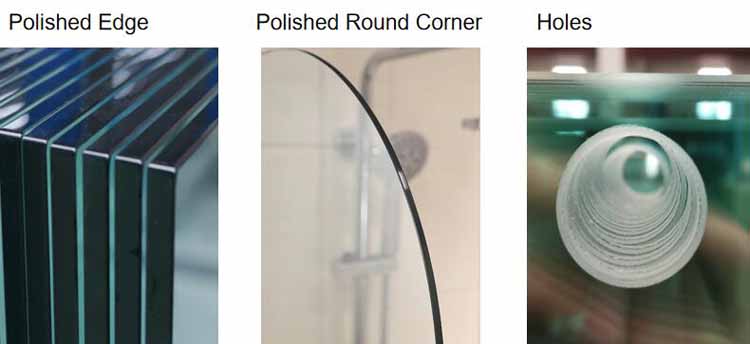
For frameless shower doors, standard thickness is typically 10 millimetres or 3/8 inch, while larger walk-in showers often require 12 millimetres or 1/2 inch for adequate rigidity. Framed systems can use 6 millimetres or 1/4 inch. All shower door glass must comply with safety standards such as ANSI Z97.1 and 16 CFR 1201 in North America, or equivalent international requirements. Many specifiers also choose textured or frosted glass for privacy, with reeded and rain patterns being particularly popular for their elegant, low-maintenance surfaces. For high-end projects, low-iron tempered glass offers superior clarity without the green tint of standard glass.
Windows Glass Systems for Bathroom Windows
Bathroom windows must admit natural light while ensuring privacy, and they must perform well in high-humidity environments. A well-designed window glass system for bathrooms typically incorporates tempered glass for safety, combined with obscuring techniques. Frosted, acid-etched, or patterned glass diffuses light effectively and prevents clear visibility from outside. Reeded glass, with its vertical ridges, has become a design favourite for bathroom windows because it maintains privacy while allowing soft illumination and complementing modern interiors.
For exterior bathroom windows, energy efficiency is also critical. Insulating glass units with Low-E coatings reduce heat transfer, preventing condensation and maintaining comfortable temperatures. Single-silver, double-silver, or triple-silver Low-E coatings reflect infrared radiation while transmitting visible light. The choice of coating depends on climate; colder regions benefit from passive Low-E coatings that retain interior heat, while warmer regions may require solar control coatings. Argon or krypton gas fills between panes further enhance thermal performance. All these glazing options must be tempered or laminated to meet safety codes for windows in wet areas.
Glass Partition Walls for Hotels Offices and Gymnasiums
Glass partitions have transformed interior design in commercial bathrooms and changing areas. In hotel bathrooms, glass walls between the sleeping area and the bathroom create a sense of spaciousness and luxury, often combined with smart glass that switches from transparent to opaque at the touch of a button. In gymnasiums and sports facilities, glass partitions separate locker rooms, shower areas, and poolside changing cubicles, allowing natural light to penetrate deep into the building while providing visual supervision for safety.
For these applications, laminated glass is frequently specified because it offers enhanced impact resistance and sound insulation. The PVB or SGP interlayer holds glass fragments if broken, preventing dangerous shards from falling. SGP interlayers are particularly strong and are used in overhead or structural applications. Ceramic frit or enamelled glass is another popular option for partitions, where a coloured or patterned frit is permanently fused to the glass surface during tempering. This provides decorative privacy, reduces glare, and can incorporate branding or wayfinding graphics. Typical thickness for interior partitions ranges from 8 to 12 millimetres, depending on panel size and acoustic requirements. Acoustic performance, measured by sound transmission class, can reach 40 to 54 decibels with double-glazed systems.
Common Glass Parameters and Selection Criteria
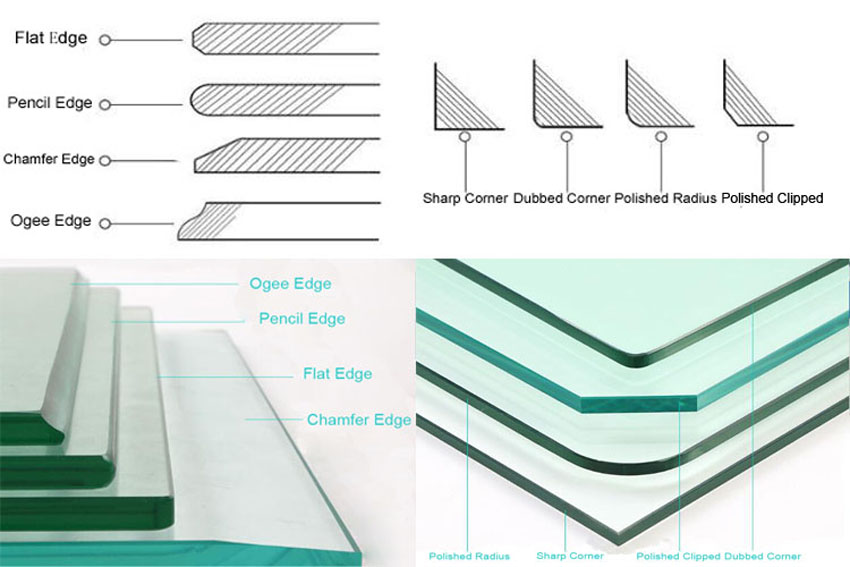
When specifying glass for bathroom applications, several technical parameters must be evaluated. Thickness is the most obvious; for shower doors, 10 or 12 millimetres are standard, while partitions may use 8 to 12 millimetres, and windows often use 5 to 6 millimetres for single glazing or as part of an insulating unit. Edge work is also important; polished edges are essential for frameless systems to ensure safety and a refined appearance. Heat-soaking is recommended for tempered glass used in high-risk areas, as it reduces the risk of spontaneous breakage from nickel sulfide inclusions.
Privacy level is achieved through opacity, with options ranging from fully transparent low-iron glass to heavily frosted or patterned surfaces. For laminated glass, the interlayer can be tinted or white to provide additional obscuration. Colour customisation is possible with ceramic frit, which can be applied in any RAL or Pantone colour, allowing architects to match bathroom design schemes. All glass must bear appropriate safety certification marks, such as 3C in China, CE in Europe, or SGCC/IGCC in North America.
Why Choose Shandong Yaohua Glass Company Limited
Selecting a reliable manufacturer is as important as selecting the correct glass type. Shandong Yaohua Glass Company Limited, founded in 1985 in Jinan, Shandong Province, has over 40 years of experience in the glass processing industry. The company operates a 50,000-square-metre intelligent manufacturing facility and has been recognised as a National High-Tech Enterprise, a Top 30 Chinese Glass Processing Enterprise, and a Shandong Province Manufacturing Single Champion.


The company’s production capabilities are world-class. It has invested in three fully imported 4SG insulating glass lines from LiSEC and Glaston, enabling fully automated production from raw sheet storage to finished units. For tempered glass, Shandong Yaohua operates five state-of-the-art tempering furnaces, including the NorthGlass 8-metre double-chamber triple-air-blast furnace, allowing the production of oversized panels up to large dimensions. Annual capacities include 1.2 million square metres of insulating glass, 1.5 million square metres of laminated glass, and 4 million square metres of tempered glass. This scale ensures reliable supply for projects of any size, from boutique hotels to large residential developments.
The company holds an extensive portfolio of international certifications, including ISO 9001, ISO 45001, China 3C safety certification, National Green Building Material certification, Australian Standards, Korean KS, EU CE, US SGCC, and North American IGCC. In 2025, its three core products simultaneously passed Korean KS recertification. These credentials ensure that glass delivered to any global project meets the most stringent safety and quality requirements.
Shandong Yaohua's products have been specified in numerous landmark projects worldwide, including the PyeongChang Winter Olympics venues in South Korea, the BMW office building in Gyeonggi-do, Bahrain's NECC New Convention and Exhibition Centre, and Zambia's Lusaka International Airport. Domestically, the company has supplied glass for Qingdao Cruise Terminal, Qingdao Hisense Financial Centre, and Jinan High-Speed Railway Station, among many others. This proven track record demonstrates the company's ability to deliver consistent quality for demanding architectural applications.
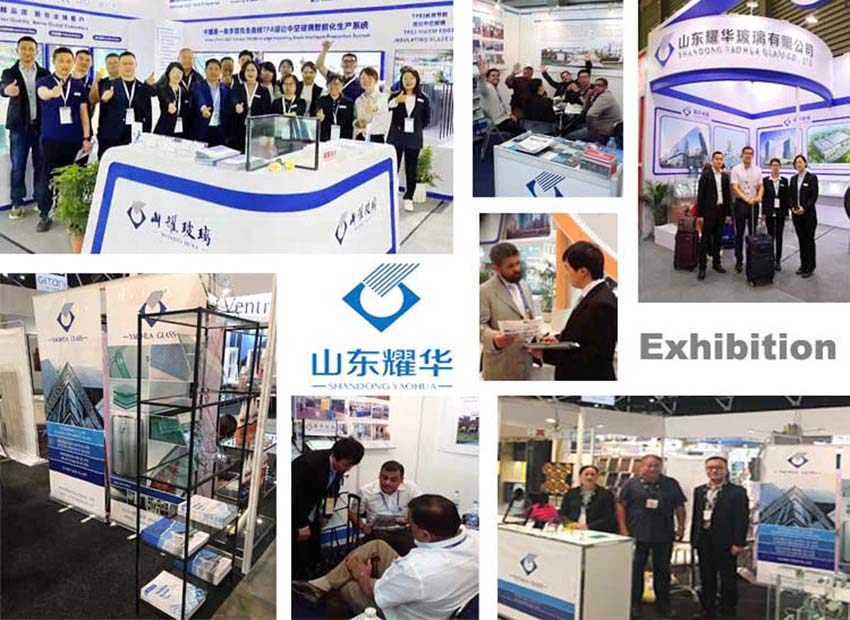
For bathroom-specific applications, Shandong Yaohua offers tempered glass in various thicknesses and sizes, laminated glass with clear or tinted interlayers, and ceramic frit glass for custom decorative patterns. The company's expertise in 4SG insulating glass also makes it a strong choice for bathroom windows that require thermal performance and condensation resistance. With a customer-first philosophy and a global export network serving more than 80 countries, the company provides responsive technical support and reliable logistics, ensuring that every order meets project timelines and specifications.
Conclusion
Architectural glass for bathroom doors, windows, and partitions relies primarily on tempered glass for safety, laminated glass for security and sound control, and ceramic frit glass for decorative customisation. Key parameters include thickness, edge finish, privacy level, and certification compliance. When selecting a supplier, experience, technology, certifications, and project references are critical. Shandong Yaohua Glass Company Limited excels in all these areas, backed by 40 years of heritage, cutting-edge 4SG production lines, comprehensive international approvals, and a global portfolio of prestigious projects. For architects, contractors, and developers seeking a trusted partner for bathroom glass solutions, Shandong Yaohua delivers the quality, safety, and innovation that modern construction demands.


