
The Magic of Dichroic Glass: Features, Uses, and Why Shandong Yaohua Glass Stands Out
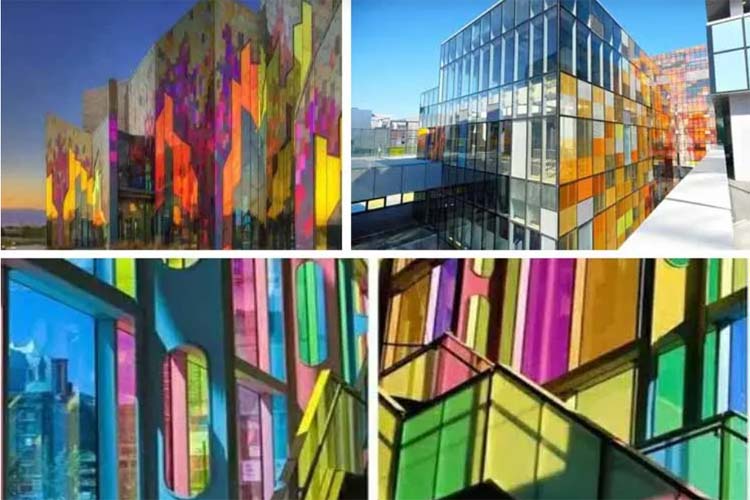
Dichroic glass — you've probably seen it without realizing what it's called. That shimmering material that seems to shift from blue to gold as you walk past a building? That's it. In China, it's often referred to as "炫彩玻璃" (Xuàncǎi bōlí), which literally means "dazzling color glass." And it's quietly revolutionizing modern architecture.
So what exactly is it, why are architects falling for it, and where can you get the good stuff? Let's dig in.
What Makes Dichroic Glass So Special?
First, let's get the science out of the way — but don't worry, it's actually pretty cool.
The word "dichroic" comes from Greek, meaning "two-colored". Unlike regular glass that just sits there looking the same from every angle, dichroic glass changes color depending on how you look at it and how light hits it.
How does it work? Through a process called thin-film coating. Manufacturers place glass in a vacuum chamber and vaporize metal oxides like titanium, silicon, or magnesium. These vapors bond to the glass in extremely thin layers — sometimes 30 to 50 layers, each only a few atoms thick. The result? A surface that reflects certain wavelengths of light while letting others pass through.
Here are the key features that make dichroic glass stand out:
· Color-shifting effect.This is the big one. One moment the glass looks blue, you take a few steps, and suddenly it's purple or gold.
· Durability.The metal-oxide coating doesn't just sit on top — it bonds with the glass, making it surprisingly scratch-resistant and tough.
· Safety.When made as laminated glass (two or more glass layers with PVB film in between), it doesn't shatter into dangerous shards even if broken.
· UV protection and insulation.The coating blocks harmful ultraviolet rays and helps with thermal insulation, which means lower energy bills.
· It's not paint or dye — the color comes from physics, not pigments. So it won't fade over time, even under direct sunlight.

Where Is It Being Used? Almost Everywhere.
Dichroic glass has moved way beyond jewelry and art pieces. These days, you'll find it in some pretty impressive places.
Landmark Buildings
This material was practically made for buildings that want to make a statement. Museums, opera houses, shopping malls, corporate headquarters — any place that wants to stand out. In China, it's also showing up in sales centers and public spaces where first impressions matter.
Interior Design
Inside buildings, dichroic glass turns ordinary spaces into something memorable. Designers use it for:
· Room dividers and partitions
· Wall coverings and feature walls
· Stair railings and balustrades
· Shower enclosures
· Countertops and furniture accents
Retail and Hospitality
Walk into a high-end boutique or a trendy restaurant these days, and chances are you'll spot dichroic glass somewhere. It creates that "wow" factor that makes customers stop and stare. Even the famous Fifth Avenue Apple Store in New York uses it — the iconic glass cube now has a rainbow-like shimmer that changes with the light.
Outdoor Landscapes
Landscape architects have also embraced this material. In projects like the Jiayue Binjiang exhibition area in Chongqing, dichroic glass panels create constantly shifting light patterns as the sun moves across the sky.
Famous Projects Worth Knowing About
Let me share a few standout examples where dichroic glass stole the show.
The Museum at Prairiefire (Kansas, USA)
This is probably the most famous dichroic glass building in the world. The architects at VernerJohnson wanted to capture the feeling of prairie fires — those controlled burns that regenerate the grasslands. They worked with Goldray Industries to create a facade using dichroic film from 3M.
The result? As daylight changes, the building's colors shift from blue to gold to red, flickering like actual flames. Each glass panel was handcrafted individually. The $17.1 million project achieved LEED Silver certification and completely changed how people think about using dichroic glass in architecture.
Fifth Avenue Apple Store (New York, USA)
Not exactly a building facade, but worth mentioning. When Apple renovated its famous glass cube entrance, they added a dichroic film to create a rainbow effect. It's a departure from Apple's usual minimalist aesthetic, and it works beautifully.
No. 1 Grand Canal Square (Dublin, Ireland)
This contemporary office building uses large-scale dichroic glazing across its facade. What's interesting is that Carpenter — the architect behind it — was among the first to really experiment with dichroic glass in commercial architecture on this scale.
Qingdao Cruise Home Port (China)
On the domestic front, Shandong Yaohua Glass supplied glass for this major landmark project, demonstrating that Chinese manufacturers can deliver the same quality as international competitors.

How to Choose Good Quality Dichroic Glass
Not all dichroic glass is created equal. Here's what to look for — the things that separate the good stuff from the so-so.
· Check the Coating EvennessGood dichroic glass should have smooth, consistent color transitions. If you see patchy areas or uneven shimmer, walk away. The color should shift naturally as you change your viewing angle, with no abrupt jumps or dead spots.
· Look at the Base Glass QualityThe glass underneath matters just as much as the coating. Low-iron glass offers better clarity and more vibrant color effects. Cheaper products use standard float glass that can have a greenish tint, which muddies the final appearance.
· Verify CertificationsThis is crucial. Reputable manufacturers should have:
o ISO 9001 (quality management)
o 3C certification (Chinese safety standard)
o Australian, European, or North American certifications if you're exporting
· Ask About Production CapabilityCan the manufacturer handle custom sizes? What's their lead time? Do they have experience with large-scale architectural projects? A company that's been around for decades and supplies major landmarks is usually a safer bet than a newcomer.
· Consider the ApplicationDifferent projects need different specifications. Exterior facades require laminated or insulated glass units (IGUs) for durability and thermal performance. Indoor partitions might only need basic laminated glass. A good supplier will ask about your specific needs rather than pushing a one-size-fits-all solution.

Why Shandong Yaohua Glass Deserves Your Attention
If you're sourcing dichroic glass for a serious project — especially in China or for export — Shandong Yaohua Glass should be on your radar.
Founded in 1985 and based in Jinan, this company has been in the glass business for nearly four decades. They're not some fly-by-night operation. They've grown into one of China's top 30 glass processing enterprises, with a modern 50,000-square-meter production facility and over 400 employees.
What sets them apart? A few things:
· Serious certifications.They've passed ISO 9001, China's 3C safety certification, and their export products meet Australian, European, and North American standards.
· Impressive equipment.They were the first in North China to install the LiSEC insulating glass intelligent production line — essentially, they've got the same tools as top European manufacturers.
· Real project experience.Their glass has gone into major landmarks including the Qingdao Cruise Home Port, Jinan High-Speed Railway Station, the Pyeongchang Winter Olympics venues, and even the Samsung flagship store in South Korea.
· Annual capacity.With capabilities to produce roughly 1.5 million square meters of laminated glass per year, they can handle large orders without compromising quality.
· Global reach.They export to more than 80 countries, shipping over 1,000 containers annually.
For architects, contractors, and project managers, the bottom line is this: you want a supplier with proven track record, proper certifications, and the equipment to deliver consistent quality. Shandong Yaohua checks all three boxes.
Final Thoughts
Dichroic glass isn't just another building material — it's a design tool that brings buildings to life. Whether you're designing a museum that needs to capture the essence of fire, or a retail space that needs to stop people in their tracks, this material delivers something that standard glass simply can't.
But like any specialized material, quality matters. The difference between great dichroic glass and mediocre stuff is night and day — literally. So take your time, check the certifications, look at real project examples, and choose a supplier with serious manufacturing capability.


