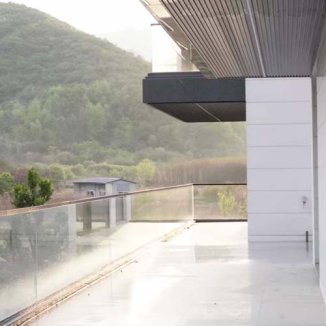
White Laminated Glass
Glass thickness: 6mm-100mm
Interlayer PVB,SGP,0.38mm,0.76mm,1.52mm,2.28mm.etc
Glass size Min:300x300mm, Max: 3200mmx13000mm, custom sizes
Shape: Flat, Curved
Could laminated metal mesh, metal plate,fabric or other materials
White laminated glass is a decorative safety glass made by bonding two or more glass panes with a white polyvinyl butyral (PVB) or SGP interlayer. The white interlayer creates a clean, uniform, opaque or translucent white appearance while providing all the safety and performance benefits of laminated glass. It is widely used in modern architecture, interior design, and furniture for its bright, minimalist aesthetic.
Common Configurations
White laminated glass can be produced in various constructions depending on strength, light transmission, and application needs:
Annealed white laminated glass – Standard configuration for interior partitions, wall cladding, and decorative panels.
Tempered white laminated glass – Combines the strength of toughened outer glass with the white interlayer; ideal for doors, balustrades, shower enclosures, and exterior facades.
Heat-strengthened white laminated glass – Offers improved thermal stability for large exterior or overhead installations.
Multi-layer white laminated glass – Three or more glass plies with white interlayers for high-impact resistance or security applications.
Translucent white laminated glass – Uses a thinner or less opaque white interlayer to allow diffused light transmission while maintaining privacy.
Low-iron white laminated glass – Uses extra-clear glass to enhance the pure white appearance without greenish tint.
Glass thickness ranges from thin (for furniture or cabinet doors) to thick (for structural or balustrade use). The white interlayer can be fully opaque (zero visibility) or semi-translucent (soft diffused light).

Key Applications
White laminated glass is prized for its bright, clean look and versatility. Common uses include:
Interior Design & Architecture
Office partitions and meeting room walls – Creates bright, open spaces with privacy.
Wall cladding and feature walls – Replaces paint or wallpaper with a durable, seamless white surface.
Balustrades and stair railings – Clean, modern safety barriers that reflect light.
Shower enclosures and bathroom partitions – Opaque white offers privacy while keeping a fresh, hygienic look.
Kitchen backsplashes and cabinet fronts – Easy to clean, heat-resistant, and stain-proof.
Lighting & Backlit Applications
Backlit walls and ceilings – White laminated glass acts as a perfect diffuser for LED lighting, creating a soft, even glow.
Light boxes and signage – Uniform illumination without hot spots.
Suspended ceilings – Combines light transmission with safety.
Furniture & Decoration
Tabletops and desks – Scratch-resistant and easy to maintain.
Shelving and display cases – Provides a clean backdrop for products.
Whiteboard surfaces – Can be written on with dry-erase markers (smooth glass surface).
Healthcare & Clean Environments
Hospital wall cladding – Non-porous, easy to disinfect, and brightens corridors.
Laboratory partitions – Chemical-resistant and seamless.
Pharmacy and clinic counters – Hygienic and professional appearance.
Exterior & Facade (with tempered lamination)
Spandrel glass – Hides structural elements behind a uniform white finish.
Canopies and sunshades – Reflects heat while providing diffused daylight.
Shopfronts and retail displays – Clean, modern branding background.
Advantages of White Laminated Glass
Compared to other white glass solutions (such as painted glass, frosted glass, or acrylic panels), white laminated glass offers unique benefits:
Permanent, non-fading color – The white interlayer is sealed between glass layers, so it never yellows, peels, or scratches off. Painted white glass can discolor or chip over time.
Uniform appearance – No brush marks, uneven coating, or edge wear. The white is perfectly consistent across the entire panel.
Safety performance – When broken, glass fragments adhere to the white interlayer, reducing injury risk and preventing fallout. Essential for overhead, public, or high-traffic areas.
UV protection – Blocks over 99% of harmful UV rays, protecting interior furnishings, artwork, and occupants from fading.
Light diffusion (translucent option) – Provides privacy while allowing soft, natural light to pass through – ideal for offices and medical spaces.
Sound reduction – The PVB interlayer dampens noise transmission, making white laminated glass suitable for quiet environments.
Easy cleaning & hygiene – Non-porous, smooth glass surface resists bacteria, stains, and fingerprints. Clean with standard glass cleaner.
Compatible with tempering – Can be heat-strengthened or fully tempered for increased mechanical and thermal resistance without affecting the white interlayer.
Eco-friendly & durable – Long service life, recyclable, and free of volatile organic compounds (VOCs) often found in painted surfaces.

Frequently Asked Questions
1. Is white laminated glass completely opaque?
It depends on the interlayer thickness and type. A standard white PVB interlayer can be fully opaque (zero visibility). Alternatively, a thinner or specially formulated interlayer can provide translucent white – allowing diffused light to pass through while still obscuring shapes.
2. Can white laminated glass be used outdoors?
Yes, but for exterior applications we recommend using tempered or heat-strengthened outer glass layers to withstand wind, thermal stress, and impact. The white interlayer itself is UV-stable and will not yellow.
3. How does it differ from white painted glass?
Painted glass has a coating applied to the back surface, which can scratch, peel, or fade over time, especially with moisture or UV exposure. White laminated glass has the color embedded internally, making it far more durable and long-lasting.
4. Does white laminated glass provide privacy?
Yes, fully opaque white laminated glass offers complete privacy. Translucent white versions provide visual screening while still allowing light to pass – ideal for office partitions or bathroom windows.
5. Can I drill or cut white laminated glass on site?
No. All cutting, drilling, and edge finishing must be done at the factory before lamination. Field modifications will break the edge seal and compromise safety and appearance.
6. Is white laminated glass more expensive than clear laminated glass?
Slightly, due to the colored (white) interlayer. However, the cost difference is minor compared to the aesthetic and durability benefits, especially for architectural and interior design projects.
7. Can white laminated glass be used as a whiteboard?
Yes. The smooth glass surface accepts dry-erase markers and wipes clean easily. This makes it a popular choice for office partitions, meeting room walls, and educational settings.
8. What about heat absorption? Does white glass get hot?
White reflects more sunlight than dark colors, so it stays cooler than black or dark gray glass. For exterior use, white laminated glass can also be combined with low-E coatings to further reduce heat gain.
9. Is the white interlayer visible from the edge?
Yes. When looking at the edge of the glass, you will see a thin white line (the interlayer). This can be concealed with edge polishing, framing, or silicone sealant if desired.
10. Why should I choose your company’s white laminated glass?
With over three decades of experience, we are a trusted smart manufacturer of high-end construction glass. Our white laminated glass is made in our 50,000+ m² facility and exported to more than 80 countries. We hold top certifications (ISO, CCC, CE, SGCC, AS/NZS, Kuraray SentryGlass, and more). You get permanent color, safety, UV protection, and architectural beauty – all backed by our quality guarantee.