AR (Anti-Reflective) Glass
Shape and Size :Flat/ Curved or Custom size
Size: Min size: 300*150mm, Max size 3300*13500mm
Jumbo glass: Thckness 18*100mm, Max size 3300*13500mm
Certificate:CE,ISO9001,IGCC,US & Canada SGCC,AS/NZS,CCC
BS EN Heat Soaked Test Report Kuraray Sentry Glas Certificate
KS Certificate
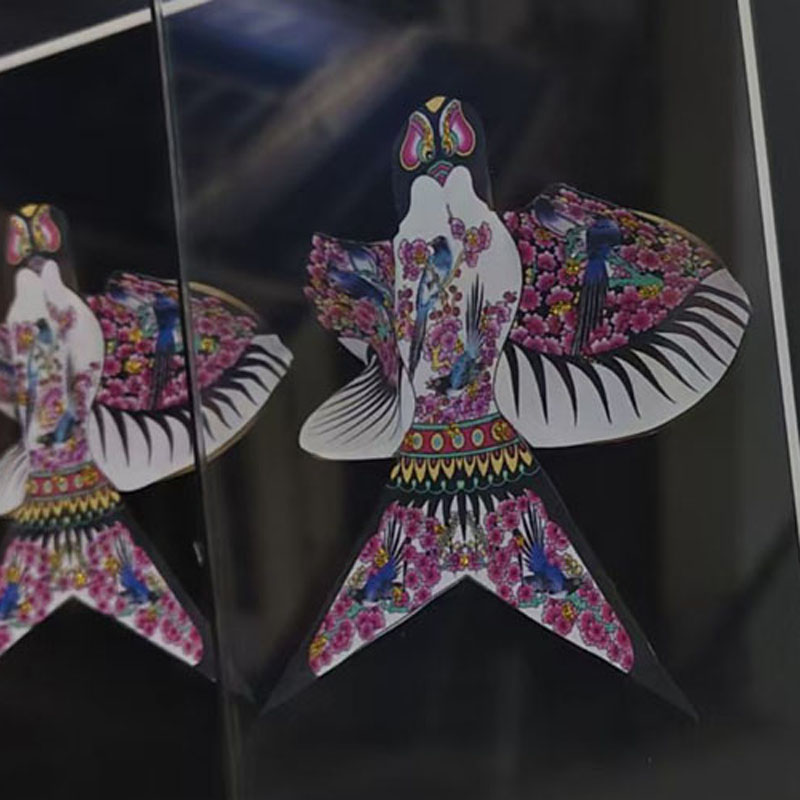
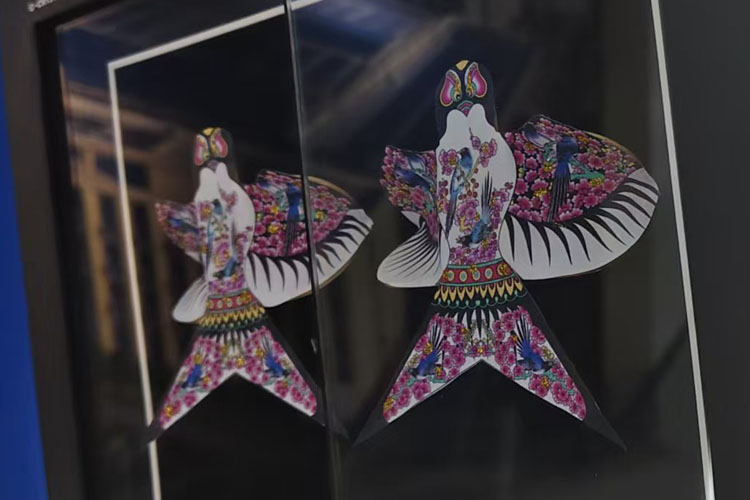
AR glass, also known as anti-reflective or anti-reflection coated glass, is a high-performance optical glass engineered to dramatically reduce surface reflections while maximizing visible light transmission. Standard uncoated glass reflects approximately 8–10% of incident light, causing glare and reducing clarity. AR glass reduces surface reflection to less than 1.5% – and in premium configurations, as low as 0.2%. This exceptional performance is achieved through advanced multilayer dielectric coatings deposited via magnetron sputtering or sol-gel processes. The coating operates on the principle of optical thin film interference: alternating highindex and low index layers are precisely thicknesscontrolled so that reflected light waves from each interface cancel each other out destructively, allowing substantially more light to pass through the glass. As a result, AR glass offers visible light transmittance (VLT) of 95–97% for standard products, with peak transmittance reaching up to 99.5% for optimized designs.

Beyond optical superiority, AR glass exhibits remarkable durability. Its coating withstands temperatures exceeding 500°C, making it suitable for heat strengthened or fully tempered applications. The surface hardness exceeds 7H (pencil hardness), comparable to the glass substrate itself, ensuring excellent scratch resistance. The coating resists degradation from acid and alkali cleaning agents, passes solvent resistance tests, and maintains optical performance after rigorous temperature cycling and humidity exposure. Additionally, AR glass provides UV protection with UV transmittance below 3%. These combined attributes – high clarity, minimal glare, mechanical robustness, and chemical stability – make AR glass an ideal material for architectural glazing, display covers, solar panels, and highend optical systems.
Product Parameters & Technical Specifications
AR glass is available in a wide range of technical specifications to suit different applications. For single-side AR coating on 6mm low-iron glass, typical visible light transmittance (VLT) is ≥94%, while visible light reflectance (VLR) is ≤4.0%. For double-side AR laminated assemblies, VLT can exceed 97% and VLR drops below 1.0%. Premium AR products achieve maximum transmittance up to 99% and minimum reflectivity as low as 0.2%. The color rendering index (CRI) is between 98.75 and 98.91, indicating excellent color neutrality. UV transmittance is below 3%. Coating hardness is ≥7H pencil hardness, and temperature resistance exceeds 500°C, making the glass suitable for tempering. The coating passes acid/alkali resistance and solvent resistance tests. Glass thickness options range from 0.4mm to 19mm. Maximum panel size can reach 4.2 meters by 3.1 meters, with larger sizes available upon request. Length and width tolerances are maintained within ±1.0mm. AR coatings can be applied to various glass substrates including low-iron glass, clear float glass, and tempered glass. Dual-side AR coatings are available for maximum transmittance. The coating’s optical performance is maintained across the visible spectrum (380–780nm) with minimal color shift, making it suitable for applications requiring true color reproduction.
Product Standards & Certifications
High quality AR glass is manufactured under strict quality management systems and complies with major international standards. Typical certifications include ISO9001 quality management, ISO45001 occupational health and safety, China 3C mandatory safety glass certification, China Green Building Material Certification, Australian/New Zealand AS/NZS standards, Korean KS standards, European Union CE certification, United States SGCC safety glazing certification, and North American IGCC insulating glass certification. These certifications are not merely administrative – they result from rigorous third-party testing that verifies optical performance (transmittance/reflectance), mechanical strength, thermal stability, and long term durability. For AR glass, which relies on nanometer scale multilayer coatings, consistent quality across large production volumes is particularly challenging. Manufacturers with these certifications demonstrate robust process control, ensuring that every glass unit meets specified transmittance and reflectance values while withstanding temperature cycling, UV exposure, humidity, and chemical cleaning agents. Multiple national patents related to coating processes and glass fabrication further attest to ongoing innovation in this field.

Product Advantages
AR glass offers clear, quantifiable benefits over conventional uncoated glass and standard low iron glass. With VLT exceeding 97% (compared to approximately 91% for uncoated low-iron glass), AR glass allows more natural light to enter a building or reach a solar cell, reducing artificial lighting needs and increasing energy output. Surface reflection drops from 8-10% to below 1%, virtually eliminating distracting reflections on storefronts, museum displays, and electronic screens – viewers see the object behind the glass, not their own reflection. By suppressing reflected light, AR glass increases image contrast and color saturation, which is critical for high end retail, art galleries, and outdoor digital signage. In photovoltaic applications, AR-coated glass improves solar cell efficiency by approximately 3% (absolute) and boosts annual energy yield by 8-10% compared to uncoated glass. In buildings, higher daylight transmittance reduces lighting loads while low-E coatings (which can be combined with AR) manage solar heat gain. The hard, chemically resistant coating withstands frequent cleaning without degradation. AR glass can be tempered, laminated, or incorporated into insulating glass units without loss of optical performance. With UV transmittance below 3%, AR glass also protects interior furnishings, artworks, and display items from harmful ultraviolet radiation. These advantages translate directly into economic and aesthetic value, making AR glass a costeffective upgrade for any project where clarity and visibility matter.
Dimensions & Customization
AR glass can be produced in a broad range of dimensions and configurations to meet architectural, display, and industrial requirements. Thickness options include 0.4mm, 0.55mm, 0.7mm, 1.1mm, 2mm, 3mm, 4mm, 5mm, 6mm, 8mm, 10mm, 12mm, 15mm, and 19mm. Maximum panel size is up to 4,200mm by 3,100mm, with larger sizes available subject to equipment limits. Minimum panel size for coating processing is 300mm by 300mm. Shapes available include rectangular, square, circular, and custom cut shapes produced by CNC machining or waterjet cutting. Edge finishing options include flat ground, arrised, polished, or seamed edges. Configurations include monolithic tempered glass, laminated glass (with PVB, SGP interlayers), insulating glass units (double-glazed or triple-glazed), and curved or bent AR glass. Coating options include single-side AR, double-side AR, AR combined with low-E, and AR combined with easy-clean or hydrophobic coatings. Custom dimensions and hole or notch cutting are available for display covers, automotive glazing, and special architectural features. Low-volume trial production is supported alongside high-volume mass production.
Application Scenarios
AR glass serves diverse industries where light transmission and glare reduction are critical. In architectural glazing, it is used for high-end retail storefronts, museum display cases, commercial building curtain walls, cultural heritage protection glazing, airport terminals, and hotel lobbies. AR glass creates an almost invisible barrier, allowing unobstructed views and natural light without distracting reflections. For museums and galleries, it serves as protective glazing over paintings, sculptures, and artifacts, allowing visitors to appreciate artworks without overhead lighting reflections or mirrored surfaces; AR laminated glass also provides safety and UV protection. In electronic displays, AR glass is applied to outdoor digital signage, advertising screens, ATMs, ticketing kiosks, and public information displays, maintaining legibility under direct sunlight by reducing surface glare and increasing contrast.
Notable Project Case Studies
Real-world projects demonstrate the performance and reliability of premium AR glass in demanding environments. For the 2018 PyeongChang Winter Olympics International Broadcasting Center in South Korea, a high specification double tempered laminated insulating glass assembly was supplied, consisting of 6mm AR coated low-E tempered glass plus 1.52mm PVB interlayer plus 6mm AR coated low-E tempered glass plus 16A warm-edge spacer plus 6mm AR coated low-E tempered glass plus 1.52mm PVB plus 6mm AR coated low-E tempered glass. The finished panels measured 4.2 meters by 3.1 meters – oversized dimensions requiring extreme fabrication precision. The AR coating reduced reflections to near zero, ensuring clear broadcast views and comfortable indoor lighting. In major commercial landmarks, AR glass has been installed in flagship retail stores, luxury hotels, and convention centers worldwide, including Olympic sports centers, high end shopping plazas, and five star hotel chains. In each case, the glass eliminates façade reflections, creates a seamless indoor outdoor connection, and meets stringent safety and energy codes. For museum display cases, AR laminated glass is used for vitrines covering priceless artifacts, providing direct, glare free viewing while the UV blocking and impact resistant properties protect the exhibits. In utility scale solar farms, thousands of square meters of AR coated solar glass have been deployed across multiple solar parks, increasing annual energy output by 8–10% compared to standard photovoltaic glass and delivering measurable return on investment.

R&D & Academic Foundations
The science behind AR glass is rooted in optical thin film physics and continues to evolve through academic and industrial research. The fundamental principle is destructive interference: coating layers with precisely controlled thicknesses (typically quarter wave or multi layer stacks at a design wavelength of 550nm, the peak of human visual sensitivity) cause reflected light waves to cancel. Advanced designs include graded refractive index (GRIN) structures, where layer by layer variation in refractive index can reduce solar reflection to as low as 0.2% compared to 3.8% for bare glass, boosting energy output by over 11% in photovoltaic applications. Biomimetic moth-eye nanostructures, produced via self-assembly and reactive ion beam etching, create sub-wavelength surface textures that suppress reflection across broad wavelength ranges and wide incident angles, offering angle independent anti-reflection. Femtosecond laser processing enables one-step generation of multiscale surface structures that combine anti-reflective and anti-fogging properties. Ongoing research focuses on durable, scalable AR coatings for flexible substrates, self-cleaning AR surfaces, and ultra-broadband AR from ultraviolet to near-infrared. Leading glass processors collaborate with universities and research institutes to translate these academic advances into commercial products, continuously improving transmission, hardness, and weather resistance.

Manufacturing Capabilities
A world class AR glass production facility integrates advanced coating equipment with comprehensive glass deep processing lines. Coating technologies include large area magnetron sputtering (inline or batch type) for uniform multilayer dielectric coatings. Cutting lines are fully automated CNC cutting tables from European manufacturers such as Intermac, Bystronic, and LiSEC, achieving tight tolerances of ±0.5mm. Tempering furnaces include horizontal and vertical tempering lines (including flat and bending furnaces) capable of processing glass up to 13 meters in length and 3.3 meters in width. AR coatings can be applied before or after tempering depending on coating design. Laminating lines consist of vacuum or roller type laminators with autoclaves for producing PVB, SGP laminates. AR laminated glass combines anti-reflection with safety and sound reduction. Insulating glass lines are fully automated with gas filling (argon/krypton) and warm edge spacer systems for high thermal performance. CNC and waterjet machining is available for precision cutouts, notches, holes, and complex shapes. Typical annual production volumes from a large scale plant can reach 3 million square meters of tempered glass, 1.5 million square meters of laminated glass, and 1 million square meters of insulating glass units. With digital management systems (MES, ERP) and an uninterrupted line workflow, manufacturers can handle both small batch prototypes (such as 100 square meters for a museum project) and high volume orders (such as 100,000 square meters for a solar farm) with consistent quality and ontime delivery. Rigorous quality control – including spectrophotometer testing for transmittance and reflectance, haze meters, humidity and temperature cycling chambers, and impact tests – ensures every shipment meets the specified performance criteria.