

Aquarium Laminated Glass
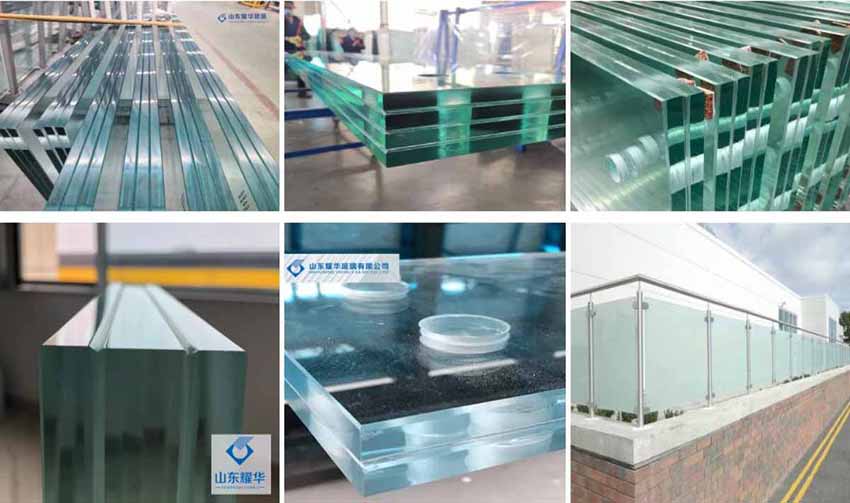
Glass thickness: 6mm-100mm
Interlayer PVB,SGP,0.38mm,0.76mm,1.52mm,2.28mm.etc
Glass size Min:300x300mm, Max: 3200mmx13000mm, custom sizes
Shape: Flat, Curved
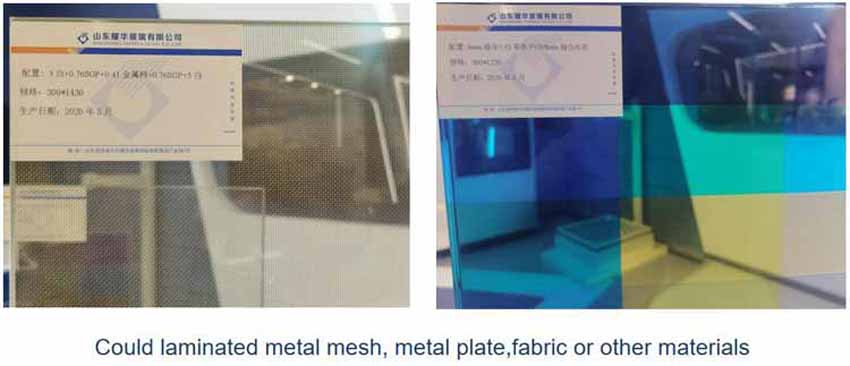
Could laminated metal mesh, metal plate,fabric or other materials
Aquarium laminated glass is a multi-layer safety glass specially designed for underwater viewing environments. Its core structure consists of two or more sheets of float glass bonded together under high temperature and pressure with high-performance interlayers such as polyvinyl butyral (PVB) or ionoplastic (SGP). Because the consequences of glass breakage underwater are extremely severe—monolithic glass is entirely unsuitable—laminated glass ensures that even if one piece shatters, the panel does not immediately fail, preventing catastrophic flooding. This makes it the ideal choice for aquarium viewing windows, underwater tunnels, submerged observation ports, and similar applications.
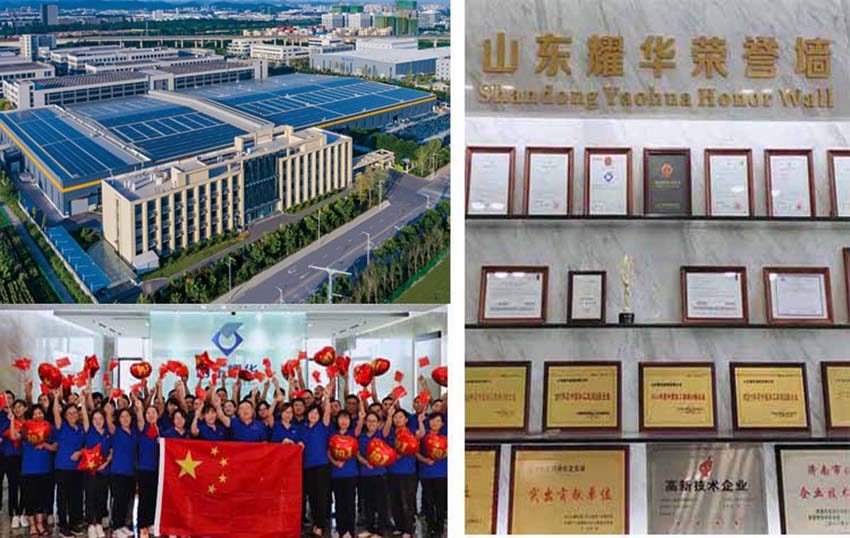
Shandong Yaohua Glass Co., Ltd., founded in 1985, is a national high-tech enterprise ranked among the top 30 processed glass manufacturers in China. It has earned both the “Shandong Famous Trademark” and “Shandong Famous Brand Product” designations. After nearly forty years of development, the company has evolved from a manual glass‑cutting workshop into a modern deep‑processing manufacturer equipped with multiple internationally advanced production lines. Its annual laminated glass production capacity reaches 1.5 million square meters. In terms of comprehensive strength, Shandong Yaohua stands first in Shandong Province and ranks among the leading companies nationwide. Its professional aquarium laminated glass solutions are precisely one of its core competitive products.
Product Characteristics: A Balance of Multi‑Dimensional Safety and Viewing Experience
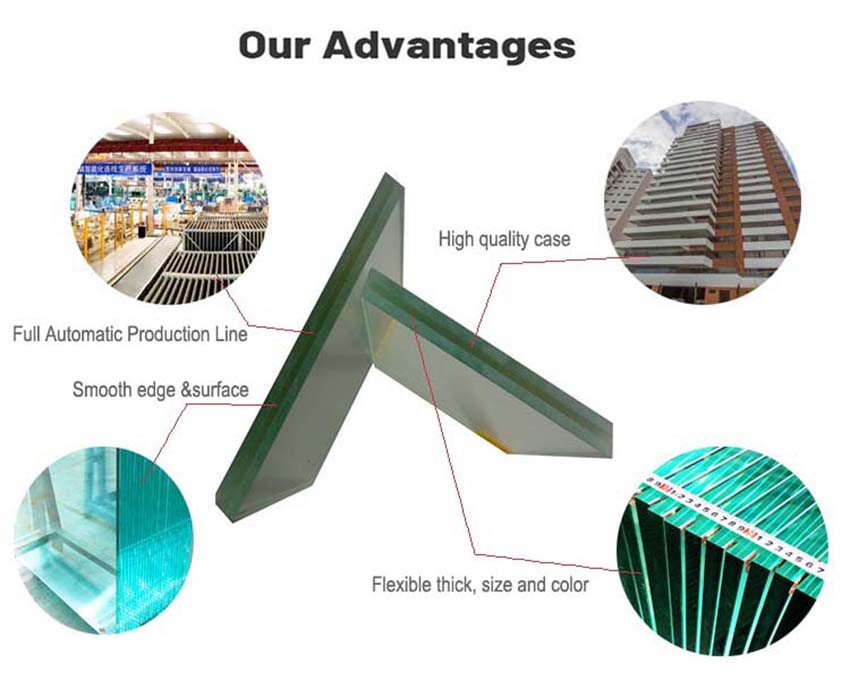
The characteristics of aquarium laminated glass can be summarized in four dimensions: safety, durability, transparency, and acoustic comfort. In terms of safety, the interlayer is extremely tough and has high adhesion. Even if the glass is impacted and breaks, the fragments do not fall away but remain firmly bonded to the interlayer. This prevents penetration and resists external impact—a vital feature for large aquarium viewing windows that bear water pressures measured in tons. Shandong Yaohua’s laminated glass exhibits a long penetration time and produces a loud noise upon breaking, giving it strong resistance to malicious damage and forced entry, as well as integrated anti‑vibration, anti‑theft, bullet‑resistant, and blast‑resistant properties. Regarding water resistance, when the edges of the laminated glass are sealed with a compatible glazing sealant, the glass shows excellent durability in long‑term immersion, fundamentally eliminating risks such as edge moisture absorption or delamination that occur with ordinary glass in wet environments. Optically, laminated glass blocks more than 95% of ultraviolet radiation, protecting aquatic life from excessive UV exposure while effectively filtering solar glare without color distortion, ensuring visitors enjoy a clear, realistic underwater viewing experience. Acoustically, the PVB interlayer provides excellent sound damping, significantly reducing low‑frequency noise from water circulation equipment and pumps, thereby creating a quiet and pleasant environment inside the aquarium. More notably, Shandong Yaohua can flexibly choose between PVB and SGP interlayers according to specific aquarium requirements. PVB interlayers have puncture resistance five times that of ordinary materials and hardness one hundred times greater; they offer better flexibility and lower cost, making them suitable for conventional aquarium viewing windows. SGP ionoplast interlayers, on the other hand, have a shear modulus more than 50 times that of ordinary PVB and five times higher tear strength. After lamination, the two glass sheets behave as a single monolithic unit, with load‑bearing capacity up to twice that of PVB laminated glass of the same thickness and bending deflection only one‑quarter that of PVB. This makes SGP especially suitable for deeper water or wider‑span deep‑sea viewing projects.
Product Parameters and Dimensions: Full Coverage of Diverse Aquarium Engineering Needs
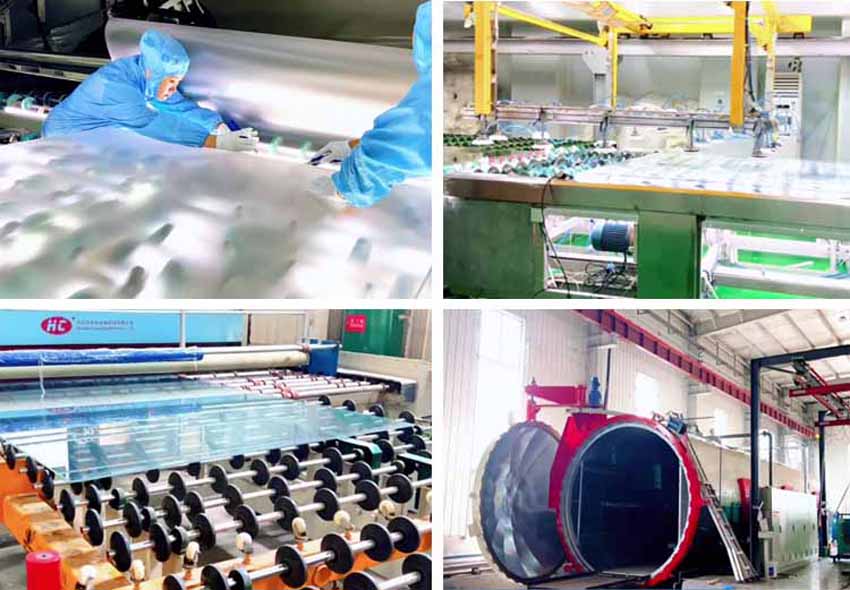
Shandong Yaohua’s aquarium laminated glass covers a wide range of specifications, reflecting strong manufacturing capabilities that meet the needs of everything from small aquarium viewing alcoves to large polar‑oceanarium windows. In terms of dimensions, the company’s maximum laminated glass size reaches 3,200 × 13,000 mm, the minimum size is 300 × 300 mm, and the total thickness ranges from 6 to 100 mm. Such an extensive dimension range places the company among the national leaders and enables adaptation to diverse water depths, from shallow children’s pools to deep shark tanks. Regarding glass thickness combinations, commonly used monolithic glass thicknesses range from 3 mm to 19 mm, while PVB interlayer thickness options include 0.38 mm, 0.76 mm, 1.14 mm, 1.52 mm, etc. The number of interlayers and their thicknesses can be flexibly designed based on water pressure calculations. A typical aquarium configuration might use a “tempered glass + PVB interlayer + tempered glass” sandwich structure; for example, 5 mm glass + 0.76 mm PVB + 5 mm glass yields a total thickness of approximately 10.8 mm, suitable for viewing windows at depths of 1 to 2 meters. For deeper exhibits exceeding 3 meters, multi‑layer designs are required—such as three or five glass sheets laminated with multiple SGP interlayers—resulting in total thicknesses of 40 to 80 mm or even thicker. Shandong Yaohua is equipped with one Shenzhen Huacai laminating line, two Shenzhen Handong laminating lines, and Liaoning Beifang autoclaves. The autoclave can be heated from 0 to 160°C and pressurized from 0 to 1.5 MPa. The entire process is electrically controlled and fully automatic, ensuring that at high temperature and pressure the interlayer melts completely and all air bubbles are expelled, achieving extremely high bond strength and optical clarity. During production, the laminating process strictly controls temperature and humidity: the clean room temperature is generally kept between 18°C and 23°C, relative humidity between 18% and 23%, and the moisture content of the PVB interlayer is maintained at 0.4%–0.6%. After pre‑rolling with heat, the assemblies are placed in the autoclave for 30–60 minutes at 120–130°C and 1.0–1.3 MPa to ensure finished products are free of bubbles, delamination, and optical distortion.
Quality Standards and Certification System: From Domestic Mandatory Certification to International Export Acceptance
As an important category of architectural safety glass, aquarium laminated glass must comply with rigorous national standards and industry norms. Shandong Yaohua has established a complete certification and standardization system. For product execution standards, the company’s laminated glass fully complies with GB/T 15763.3-2009 “Safety glass for building – Part 3: Laminated glass” and the internal control standard SDYH‑ZY‑PZ‑02 for production and inspection. This standard defines terminology, classification requirements, material specifications, test methods, and inspection rules, with clauses 6.7 through 6.11 being mandatory. Notably, the Standardization Administration of China issued the new standard GB/T 15763.3-2025 on October 31, 2025, which will come into effect on August 1, 2026, replacing the current GB/T 15763.3-2009. The new standard further clarifies key indicators such as fire resistance integrity and insulation. Shandong Yaohua has already begun upgrading its procedures to align with this latest standard. Additionally, all company products have passed mandatory national 3C safety glass certification, ISO 9001 quality management system certification, and ISO 45001 occupational health and safety management system certification. Regarding international certifications, Shandong Yaohua’s export aquarium laminated glass has also passed multiple authoritative international certifications, including Australian standard certification, Korean KS certification, EU CE certification, US SGCC certification, and North American IGCC certification. The company’s export products reach more than 80 countries and regions worldwide. In terms of equipment and technical capability, the company has introduced an Austrian LiSEC intelligent insulating glass production line, a Finnish Tamglass tempering furnace, four fully automatic insulating glass production lines, four fully automatic cutting lines (including Italian Intermac, Swiss Bystronic, and Austrian LiSEC equipment), and two fully automatic laminated glass production lines. In 2022, the company further introduced an advanced LiSEC 4SG insulating glass line, and in 2024, two more Glass‑to‑Glass 4SG insulating glass lines. This combination of world‑class equipment gives Shandong Yaohua a rare ability to produce large‑format, thick laminated glass with high precision and consistent batch‑to‑batch quality, which is fundamental for aquarium applications.
Application Scenarios and Reference Projects: Domestic and Global Aquarium Glass Solutions
Shandong Yaohua’s aquarium laminated glass is suitable for a wide range of applications, including aquarium observation windows, large‑scale oceanarium viewing walls, underwater sightseeing tunnels, submersible viewing cabins, laboratory water tanks, underwater camera windows for swimming pools, and underwater display cases. In aquarium settings, large laminated glass panels not only bear water pressures of thousands of tons but also create an immersive deep‑sea experience, enabling close interaction between visitors and marine life. Numerous landmark aquarium projects in China and around the world have adopted high‑performance laminated glass as the core viewing material. For example, the polar bear hotel exhibit area at Harbin Polar Park, completed in 2020, features a giant reinforced glass panel made by bonding five layers of glass with a bullet‑resistant SGP interlayer. The finished panel measures 5.9 meters high, 10.5 meters wide, and weighs 16 metric tons—making it the largest reinforced glass panel in a polar‑themed park in China. It creates a safe, transparent barrier between the polar bears and visitors. Internationally, the main viewing window of the newly built Sea Shell Aquarium in Vietnam uses a PLEXIGLAS® panoramic structure 790 mm thick, 9 meters high, 26 meters wide, weighing 220 metric tons, connected to a 58‑meter underwater tunnel. This is currently one of the largest monolithic underwater viewing window structures in the world, demonstrating the irreplaceable role of large laminated glass in top‑tier aquariums worldwide. Although Shandong Yaohua is best known as a comprehensive architectural glass manufacturer—with an annual laminated glass capacity of 1.5 million square meters and exports to more than 80 countries—the company has long supplied high‑quality laminated glass for domestic and international underwater engineering projects. Its architectural glass products have been used in major projects such as the Jinan Olympic Sports Center, Qingdao Cruise Homeport, Shandong Provincial Mass Art Center, PyeongChang Winter Olympics venues in South Korea, the Bahrain NECC New Exhibition and Convention Centre, and the Lusaka International Airport in Zambia. The stringent safety requirements of these landmark buildings are fully aligned with the high standards demanded for underwater laminated glass. Moreover, Shandong Yaohua has deep expertise in extra‑long, extra‑wide, and extra‑thick glass as well as bullet‑resistant glass. Its oversized glass panels offer excellent pressure resistance, impact resistance, and penetration resistance, making them suitable for aquarium structural applications such as extra‑large floor slabs and glass walkways. When combined with coating or ceramic frit printing, they can create transparent spaces with exceptional height and span, truly integrating safety, aesthetics, and functionality in aquarium glass engineering. Compared with acrylic glass, Shandong Yaohua’s laminated glass offers distinct advantages: acrylic has good toughness and light weight, but its surface is easily scratched, requires demanding cleaning and maintenance, and gradually yellows under long‑term UV exposure. Laminated glass, by contrast, has high surface hardness, scratch resistance, and aging resistance, with much lower maintenance costs—especially suitable for public aquarium exhibits that experience heavy visitor contact. For underwater installation, the laminated glass can achieve excellent water resistance by edge sealing with a compatible sealant. Once properly installed, it can withstand long‑term immersion in chlorinated water without delamination or edge failure. In summary, with nearly four decades of experience and a continuously innovating production system, Shandong Yaohua Glass Co., Ltd. has developed a complete, reliable underwater glass engineering solution, establishing a new benchmark for aquarium glass that combines safety and visual appeal for projects around the globe.


